



A Practical Guide to Production Lines in Modern Manufacturing
In today’s highly competitive manufacturing environment, companies must organize their operations efficiently to stay agile, scalable, and profitable. One of the most fundamental ways they achieve this is by classifying product lines. Understanding how companies classify product lines helps manufacturers optimize workflow, improve quality control, and respond faster to market demand.
This article explores the core principles behind product line classification, with a strong focus on production line structures, including the manufacturing line, factory line, laser line, slitting line, flex line, and quality line. We’ll also explain why these classifications matter for operational efficiency and long-term growth.
1. What Is a Product Line in Manufacturing?
A product line refers to a group of related products that share similar production processes, technologies, materials, or target markets. In manufacturing, product lines are usually organized around a production line, which defines how raw materials are transformed into finished goods.
Unlike simple product categorization for marketing, manufacturing product lines are classified based on:
Process flow
Equipment type
Level of automation
Production volume
Quality requirements
This operational perspective allows companies to align equipment, labor, and quality standards more effectively.
2. Why Do Companies Classify Product Lines?
Companies classify product lines to achieve several strategic goals:
Improve efficiency by standardizing workflows
Reduce production costs through specialization
Enhance quality consistency across similar products
Scale operations without disrupting existing systems
Support flexible manufacturing for customized orders
By clearly defining each manufacturing line or factory line, companies can allocate resources more accurately and avoid production bottlenecks.
3. Classification by Production Process
One of the most common methods of classification is by production process. This approach groups products based on how they are made rather than what they are.
3.1 Production Line-Based Classification
A production line is a sequence of workstations where each step adds value to the product. Companies often classify product lines according to:
Continuous production
Batch production
Discrete manufacturing
High-volume standardized products typically run on dedicated production lines, while low-volume or customized products may share flexible systems.
3.2 Manufacturing Line vs Factory Line
Although often used interchangeably, there is a subtle difference:
Manufacturing line: Refers to a specific process-focused line, such as machining, assembly, or finishing
Factory line: A broader term that may include multiple manufacturing lines within one facility
Large manufacturers often divide their factory line into several specialized manufacturing lines to handle different product families.
4. Classification by Technology Type
As production technology evolves, many companies classify product lines by core equipment or processing technology.
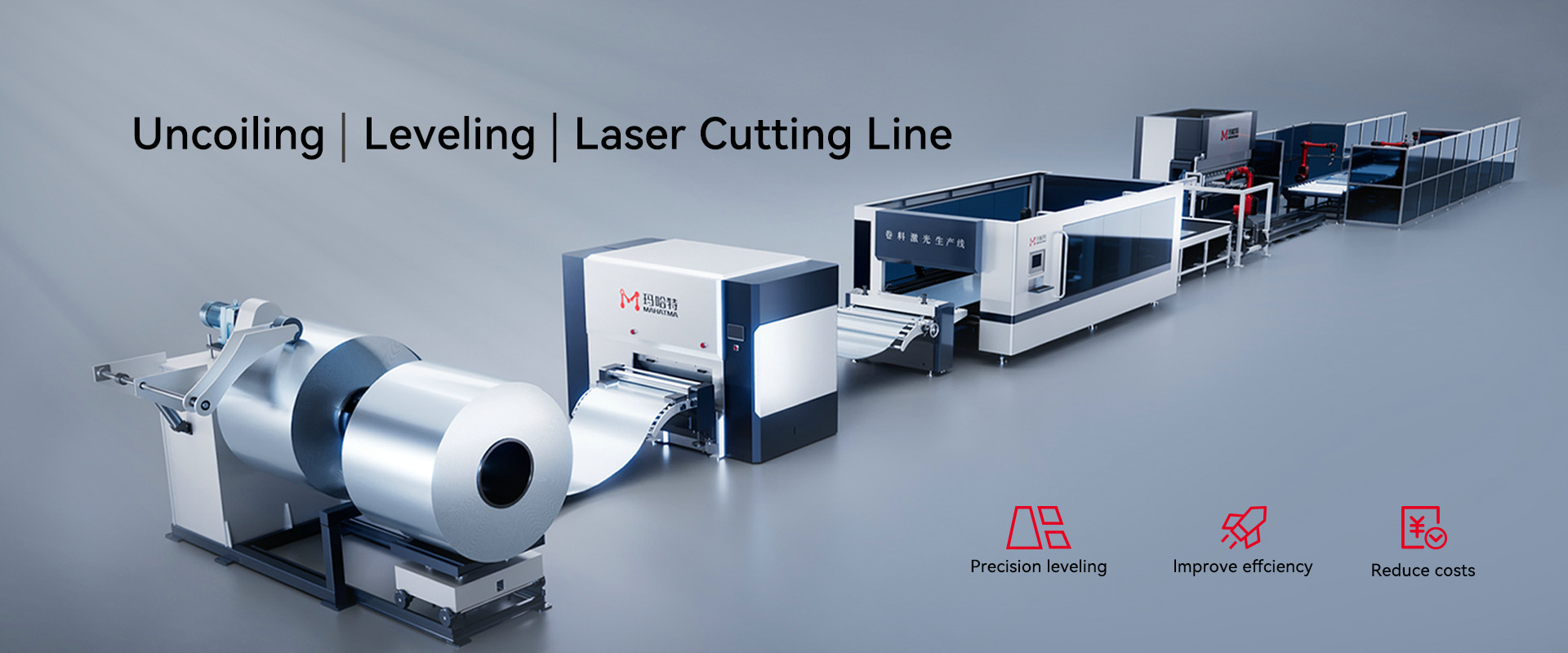
4.1 Laser Line Classification
A laser line is a production line centered around laser-based processes such as:
Laser welding
Laser marking
Products that require high precision, minimal heat distortion, and clean edges are often grouped into a laser line. This classification allows companies to:
Centralize laser equipment
Share skilled operators
Maintain consistent process parameters
Laser lines are common in electronics, automotive parts, and precision metal fabrication.
4.2 Slitting Line Classification
A slitting line is used for processing coils of metal, paper, plastic, or film into narrower strips. Companies classify products into a slitting line when they share:
Similar material thickness
Coil width
Tension and tolerance requirements
By grouping products under a slitting line, manufacturers can improve setup efficiency and reduce material waste.
5. Classification by Flexibility and Customization
Modern manufacturing increasingly demands flexibility. This has led to a growing focus on flex line classification.
5.1 Flex Line (Flexible Production Line)
A flex line is designed to handle multiple product variants with minimal changeover time. Companies classify product lines as flex lines when:
Product designs change frequently
Order quantities are small or medium
Customization is a competitive advantage
Flex lines often use:
Modular fixtures
CNC and robotic systems
Digital production planning
This classification is especially valuable for manufacturers serving diverse international customers.
6. Classification by Quality Requirements
Quality is another critical dimension in product line classification.
6.1 Quality Line Concept
A quality line is a production or manufacturing line dedicated to products with:
Higher tolerance requirements
Strict inspection standards
Industry certifications (ISO, IATF, medical, aerospace)
Products assigned to a quality line typically undergo:
Additional in-process inspections
Automated measurement systems
Full traceability
By separating high-quality products into a dedicated quality line, companies reduce the risk of cross-contamination with standard production.
7. Classification by Production Volume
Production volume plays a key role in defining product lines.
High-volume production line: Optimized for speed and cost
Medium-volume manufacturing line: Balances efficiency and flexibility
Low-volume or prototype line: Focuses on accuracy and adaptability
This classification helps companies decide whether a product belongs in a dedicated factory line or a shared flex line.
8. How Product Line Classification Improves Efficiency
Clear product line classification delivers measurable operational benefits:
Shorter setup times
Better equipment utilization
Easier workforce training
More predictable output
Improved on-time delivery
For example, separating a laser line from a slitting line avoids scheduling conflicts and ensures each line operates at optimal capacity.
9. Digitalization and Smart Product Lines
With Industry 4.0, product line classification is becoming more data-driven.
Smart manufacturing systems allow companies to:
Monitor each production line in real time
Adjust factory line layouts dynamically
Integrate quality line data into ERP and MES systems
Digital tools make it easier to reclassify product lines as market demand changes, especially in flexible manufacturing environments.
10. Common Mistakes in Product Line Classification
Despite its importance, companies sometimes make classification errors:
Mixing high-precision products with standard products
Overloading a single manufacturing line
Ignoring future scalability
Underestimating quality line requirements
Avoiding these mistakes requires a clear understanding of process capability and long-term production strategy.
11. Best Practices for Classifying Product Lines
To classify product lines effectively, companies should:
Analyze process similarity
Evaluate equipment and technology needs
Define quality and tolerance levels
Consider future product expansion
Align production line structure with business goals
This structured approach ensures that each production line supports both operational efficiency and customer satisfaction.
12. Conclusion: Product Line Classification as a Competitive Advantage
So, how do companies classify product lines? The answer lies in a combination of process flow, technology, flexibility, quality, and production volume. By organizing products into clearly defined production lines, such as a laser line, slitting line, flex line, or quality line, manufacturers can build more resilient and scalable operations.
In modern factories, well-structured manufacturing lines and factory lines are not just operational tools—they are strategic assets. Companies that master product line classification are better positioned to deliver consistent quality, respond to market changes, and maintain a strong competitive edge in global manufacturing.