



In modern manufacturing, production line efficiency is crucial for competitiveness, cost reduction, and timely delivery. With evolving customer demands and increasingly complex products, optimizing a production line has become more than a necessity—it is a strategic priority. Manufacturers across industries are seeking ways to increase throughput, reduce waste, and maintain high-quality standards. This article explores practical strategies for improving production line efficiency, leveraging advanced equipment, precision tools, and smart manufacturing techniques.
Understanding Production Line Efficiency
Production line efficiency refers to the ability of a manufacturing process to produce goods at the desired rate while minimizing downtime, errors, and waste. It encompasses not only the speed of production but also quality, flexibility, and adaptability to changing requirements. Key factors influencing efficiency include equipment capability, workflow design, operator skill, material handling, and process monitoring.
Modern production lines increasingly rely on flexible production line setups, allowing manufacturers to handle different products and volumes without significant downtime. Flexibility ensures that production can adapt to variations in demand while maintaining high efficiency.
Advanced Equipment for High Efficiency
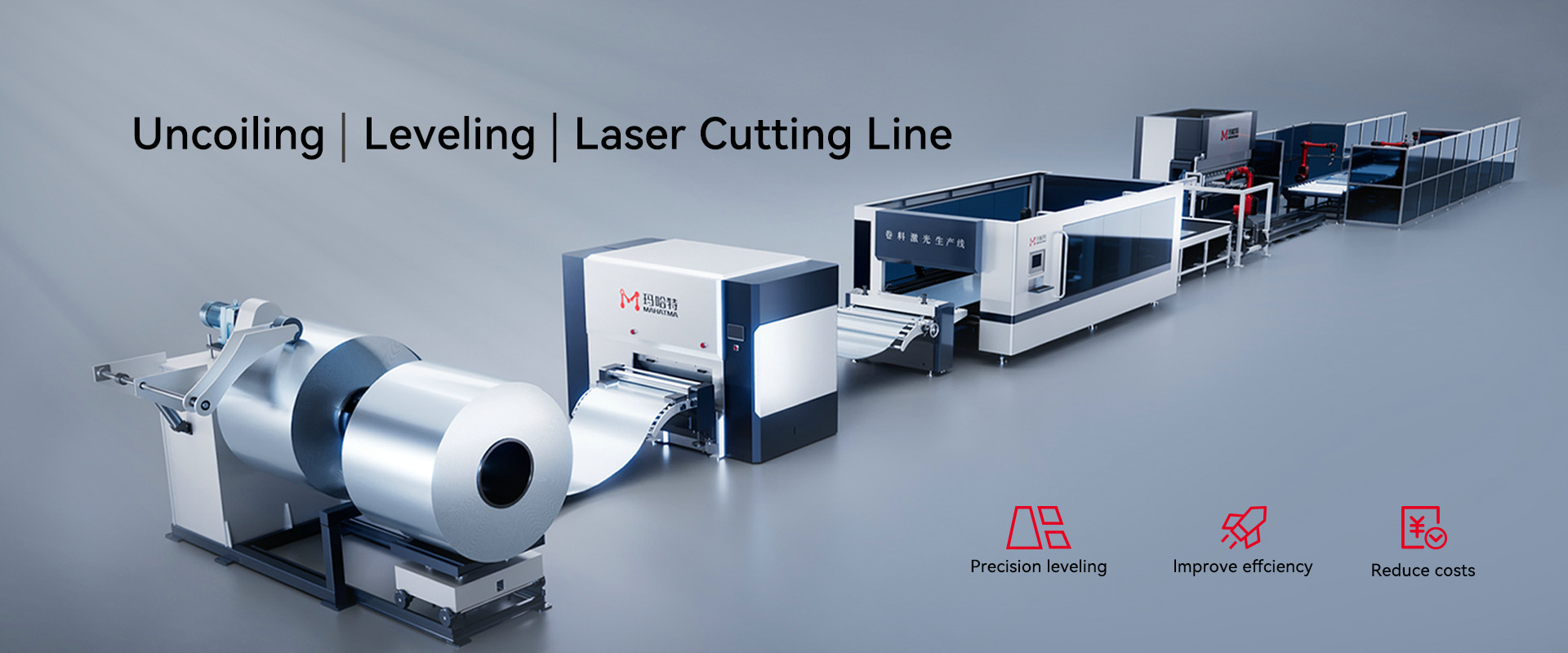
One of the most effective ways to enhance production line efficiency is through investment in specialized, integrated equipment. For instance, modern Sheet Processing systems offer an all-in-one solution, combining decoiling, feeding, cutting, and unloading functions to enable seamless one-stop processing from coiled materials to finished products. Such equipment provides several advantages:
Ultra-Precision Leveling: Achieving 0.01mm material flatness ensures consistency and minimizes post-processing corrections.
End-to-end integration: Seamlessly combining leveling and cutting improves throughput by reducing manual handling and intermediate storage.
Multi-material support: The ability to handle diverse materials allows a flexible production line, accommodating multiple product types without major changeovers.
Quick changeover and multi-coil switching: With an Industry 4.0 collaborative control system and adaptive dynamic compensation algorithms, operators can switch materials or coils quickly, reducing downtime.
Scalable production: Five series of production equipment provide options for small, medium, and large-volume applications, ensuring optimal efficiency across various production scales.
Leveraging Laser Technology for Precision
Incorporating laser systems into production lines can significantly enhance efficiency, particularly in high-precision manufacturing. Laser levels, including rotary laser level and self-leveling laser, are essential tools for ensuring precise alignment, accurate material positioning, and consistent operation across complex setups. Benefits include:
Accurate leveling: Using a best laser level ensures that all machinery and workpieces are aligned, reducing errors and material waste.
Consistency across multiple machines: Rotary and self-leveling lasers allow uniformity in setups, critical for flexible production line operations where multiple stations interact.
Reduced setup time: Quick leveling decreases downtime between shifts, line changeovers, or product adjustments.
Alongside laser tools, mechanical aids like leveling feet can further stabilize equipment, ensuring minimal vibration and maintaining precision during high-speed operations.
Process Optimization Strategies
1. Streamline Workflow
Efficient production begins with a well-organized workflow. Map out every step of your production line, identify bottlenecks, and eliminate unnecessary steps. Implementing flexible production line configurations allows simultaneous processing of multiple products and adapts to changing production volumes.
2. Embrace Industry 4.0
Modern production efficiency depends on smart, data-driven systems. An Industry 4.0 collaborative control system can monitor operations in real time, detect deviations, and provide actionable insights. Features such as predictive maintenance and automated error correction help maintain consistent output and reduce downtime.
3. Reduce Material Handling
Integrated equipment that combines decoiling, feeding, cutting, and unloading minimizes manual handling, reducing human error and speeding up production. This end-to-end automation ensures that materials move smoothly through the production line, maintaining high throughput and quality.
4. Standardize Setup and Maintenance
Proper machine setup is critical for minimizing production disruptions. Using tools such as a self-leveling laser or rotary laser level ensures that machines are perfectly aligned, while leveling feet provide mechanical stability. Regular calibration and preventive maintenance further reduce unexpected downtime.
5. Optimize Changeovers
For manufacturers producing multiple products, downtime during changeovers can severely impact efficiency. Advanced systems with adaptive algorithms support quick coil switching, automated tool adjustments, and precise material alignment, enabling rapid transitions between product runs.
6. Improve Quality Control
High efficiency is meaningless if products fail quality standards. Integrating inline inspection and monitoring systems reduces defects and rework. The precision provided by laser leveling and ultra-precision leveling in sheet handling ensures consistent material quality and flatness, which reduces waste and increases overall throughput.
Benefits of a Flexible Production Line
A flexible production line offers several advantages:
Adaptability to demand fluctuations: The line can handle variations in product types and volumes without extensive reconfiguration.
Enhanced productivity: Multi-tasking capabilities reduce idle time and maximize resource utilization.
Reduced operational costs: Automation and integrated processes lower labor requirements and material waste.
Scalability: From low-volume prototyping to high-volume mass production, flexible lines can adjust to the scale of operations.
Integration of Precision and Automation
The combination of precise leveling, laser guidance, and automated equipment ensures that each step of production is optimized. Equipment that supports High-Precision Leveling and cutting, along with diverse material handling, is particularly effective in industries such as automotive, electronics, and sheet metal fabrication. By integrating these capabilities, manufacturers can achieve seamless production that meets stringent tolerances and quality requirements.
Conclusion
Improving production line efficiency requires a multi-faceted approach that combines advanced equipment, precise measurement tools, smart workflow design, and automated control systems. By utilizing flexible production line setups, integrated leveling and cutting systems, and precision tools like laser levels, rotary laser levels, and self-leveling lasers, manufacturers can achieve higher throughput, reduce errors, and maintain consistent product quality. Complementing these technologies with mechanical aids such as leveling feet ensures stable and reliable operations.
As modern manufacturing continues to evolve, the integration of Industry 4.0 principles and advanced automation will be key to sustaining production efficiency. Investing in cutting-edge technology, optimizing workflow, and implementing precision alignment techniques are critical strategies that enable manufacturers to stay competitive and deliver high-quality products at optimal speed.