



Line production is one of the most widely used manufacturing methods in modern industry. It enables companies to produce goods efficiently, consistently, and at scale by organizing workflows in a step-by-step sequence. From automotive assembly to consumer electronics, packaging, Metal Processing, and textile manufacturing, line production optimizes every process by standardizing tasks and minimizing unnecessary movement. In today’s era of automation and digital transformation, production lines have evolved into more flexible, intelligent, and diversified systems, such as the flexible production line, flex line, and even unique systems like Belt-supported Non-Destructive Cutting Flexible Production Line used for precision material handling.
1. Definition: What Is Line Production?
Line production—often called assembly line production—is a manufacturing approach where a product moves through a sequence of workstations, each performing a specific task. Every workstation focuses on one repeated operation, and the product flows continuously until it is completed.
The core idea is division of labor + sequential workflow, which increases productivity and standardizes quality.
A traditional line production layout includes:
Material input section
Sequential process stations
Inspection points
Packaging or final assembly
Output or shipping area
This model reduces downtime, minimizes human error, and ensures highly consistent product quality.
2. How Line Production Works
2.1 Sequential Task Distribution
Each workstation performs only one part of the process. For example, in a smartphone assembly line:
Board installation
Battery placement
Screen bonding
Software flashing
Reliability testing
Packaging
This structure simplifies training and speeds up production cycles.
2.2 Continuous Product Movement
Products move along conveyors or transport systems. Modern systems often use:
Flex line conveyor for flexible routing
Automated guided vehicles (AGVs)
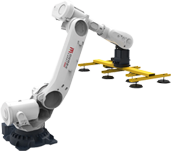
Robotic arms for transfer
Modular roller conveyors
These transport systems significantly reduce manual handling.
2.3 Standardized Cycle Time (Takt Time)
Takt time is the rhythm of the production line. The operation time at each station must match this rhythm to ensure seamless output without bottlenecks.
2.4 In-line Quality Control
Sensors, cameras, and machine-learning systems can detect defects in real time.
Some industries integrate laser line measurement systems to ensure precise alignment, thickness, or cutting accuracy.
3. Advantages of Line Production
3.1 High Efficiency and Throughput
Because each task is specialized, workers or machines complete tasks faster, allowing large-scale production.
3.2 Lower Production Costs
Streamlined workflows reduce labor needs, training time, and material waste.
3.3 More Consistent Product Quality
Standardization makes every item uniform, which is essential for electronics, automotive parts, and medical supplies.
3.4 Easy Integration With Automation
Robotics, AI recognition, and smart sensors can easily be added to modern production lines.
3.5 Scalable and Customizable
Modular lines—such as the flexible production line—can be reconfigured to produce multiple product types.
4. Types of Line Production
Modern manufacturing uses several variations depending on product type, flexibility requirements, and automation level.
4.1 Traditional Linear Production Line
This is the classic straight-line layout. Products move from point A to point Z through a fixed number of steps. Most packaging plants and food processing facilities still use this layout.
4.2 Flexible Production Line (Modern Standard)
A flexible production line adapts to multiple products, variations, or batch sizes. It can quickly adjust to production changes without major downtime.
Key features:
Modular workstations
Software-controlled process switching
Hybrid automation + skilled operator support
Ability to run multiple variations or SKUs
This model is widely used in:
Consumer electronics
Automotive components
Smart home devices
Small-batch customized manufacturing
A flexible production line helps companies stay competitive in a market that demands rapid product updates.
4.3 Flex Line
A flex line is a streamlined variant of flexible production designed for high-speed but adaptable processing. It is often used in:
Light electronics
Wire harness assembly
Smart wearable devices
Injection molding parts sorting
Combined with a flex line conveyor, the system allows materials to move in curved, circular, or multi-directional paths—not restricted to a straight line.
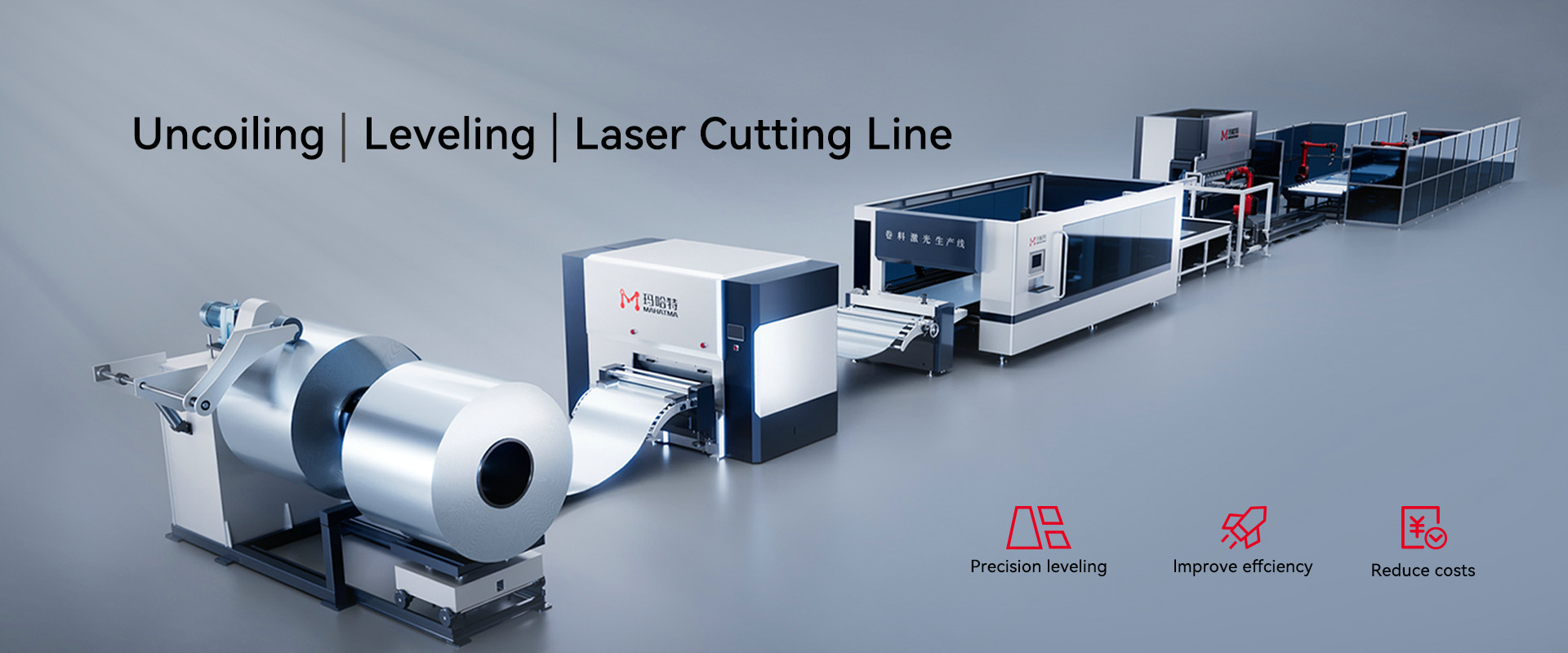
4.4 Slitting Line
A slitting line is a specialized production line used in Metal Processing, packaging film manufacturing, paper production, and composite materials.
It cuts wide materials into narrow strips using high-precision rotary blades.
Applications include:
Steel coil slitting
Aluminum foil slitting
Plastic film slitting
Paper roll cutting
This type of line is common in coil processing centers and flexible packaging factories.
4.5 Laser Line
A laser line is not a traditional production line but a technology used within production systems for:
Laser measurement
Alignment verification
Welding guidance
Surface inspection
Laser systems enhance accuracy and reduce manual adjustments, making them indispensable in aerospace, electronics assembly, and precision machining.
4.6 Belt-Supported Non-Destructive Cutting Flexible Production Line
This advanced system is designed for applications requiring damage-free cutting, particularly in:
Soft materials
Foam
Protective films
Laminated fabrics
Precision composite sheets
The belt-supported structure ensures that materials remain flat and stable during processing. Non-destructive cutting avoids burn marks, pressure marks, or deformation.
Industries benefiting from this system:
Automotive interiors
Consumer packaging
Protective padding
Medical supplies
Industrial insulation materials
This type of flexible production line demonstrates how modern manufacturing has expanded far beyond simple assembly into precision processing.
5. Applications of Line Production Across Industries
5.1 Electronics Manufacturing
From smartphones to LED lights, electronics rely heavily on highly automated production lines.
Robotic insertion, soldering, optical inspection, and laser line quality control are widespread.
5.2 Automotive Industry
Cars require thousands of individual components.
Assembly lines handle:
Stamping
Welding
Painting
Drivetrain assembly
Electronics installation
Flexible and flex line systems are especially important for handling different car models on the same production line.
5.3 Metal and Material Processing
Industries producing steel coils, aluminum sheets, or industrial films use slitting lines for high-speed cutting.
These lines must maintain precision to avoid material waste.
5.4 Packaging and Printing
Packaging factories use conveyor-based line systems for:
Filling
Labeling
Capping
Shrink-wrapping
A flex line conveyor ensures product flow is smooth, even when packaging sizes vary.
5.5 Textile and Composite Manufacturing
Modern fabric and composite processing plants may integrate:
Laser alignment
Non-destructive cutting
Multi-layer slitting
Flexible material feeding systems
Here, the Belt-supported Non-Destructive Cutting Flexible Production Line provides unmatched precision.
6. Why Modern Manufacturing Prefers Flexible Production Lines
Traditional fixed lines are effective for massive, long-term production. However, modern industries require:
More product variations
Short production cycles
Customizable features
Faster market response
This shift has led to rapid adoption of:
flexible production line architectures
flex line systems
Intelligent conveyors
AI-based adaptive scheduling
These innovations allow manufacturers to switch product types in minutes, not days.
7. Future Trends in Line Production
7.1 Smart Automation
Robots, smart cameras, and machine learning will handle repetitive tasks and inspection.
7.2 Digital Twins
Virtual models of production lines will enable simulation before implementing physical changes.
7.3 AGV-Based Flexible Systems
Self-driving units may replace fixed conveyors, giving factories unlimited layout options.
7.4 Energy-Efficient Laser Systems
Laser lines will play increasing roles in cutting, marking, tracking, and dimensional measurement.
7.5 Sustainable Manufacturing
New flexible cutting systems—such as Belt-supported Non-Destructive Cutting Flexible Production Line—minimize waste and energy consumption.
Conclusion
Line production remains a cornerstone of modern manufacturing, offering unmatched efficiency, scalability, and consistency. However, the industry has evolved far beyond the traditional assembly line. Systems like the flexible production line, flex line, slitting line, and flex line conveyor illustrate a shift toward adaptability and precision. Technologies such as laser line quality control and advanced solutions like the Belt-supported Non-Destructive Cutting Flexible Production Line showcase how manufacturers can achieve both speed and accuracy without damaging materials.
As industries continue moving toward automation and customization, flexible, intelligent, and high-precision production lines will define the future of global manufacturing.